
Skip to content
  • about us
  • insights
  • approach
  • work
  • training
  • tools
  • contact us
  • about us
  • insights
  • approach
  • work
  • training
  • tools
  • contact us
  • about us
  • insights
  • approach
  • work
  • training
  • tools
  • contact us

Author: james@fivecreative.com.au

Epic Games takes a bite out of Apple
It’s January 1984, and a young, upstart tech company releases an ad for their new product.

Don’t take journalism for granted, you’ll miss it when it’s gone
Like most industries, news has been at the mercy of COVID-19, the axe brought down on hundreds of jobs across our two major news publishers, Nine and News Corp, leaving the profession close to life support.

Lessons Learnt From Dan Andrews’ Crisis Communications

Victoria’s State Premier, Daniel Andrews holds an unenviable position. He is responsible for communicating a seemingly endless stream of bad news, to an increasingly anxious and fatigued public. 

How communications helped launch a British football club into the Premier League
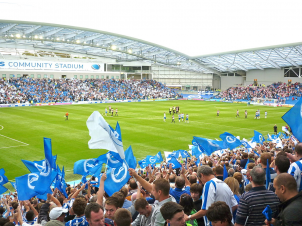
While business decisions should always be made through a financial lens, the communication angle is sometimes neglected.

Pitching to the media: it’s tougher than it looks
It’s one of the most challenging components of PR, yet to the untrained eye, pitching to the media can look remarkably easy.

Barcelona Principles 3.0: Seven Principles To Guide Communicators

Ten years ago, PR practitioners from around 35 countries met in Barcelona, Spain for a summit that would advance the PR/communications industry globally.

← Previous
Next →
I'm a simple dog. All I need is Mum, treats and a I'm a simple dog. All I need is Mum, treats and a nice walk.
A word from Louis 🐾 Can AI hear what matters? I A word from Louis 🐾

Can AI hear what matters?

I have believed the best technology is technology that knows its place. Preferably below the office dog.

A study tested an AI-enabled stethoscope on 54 dogs and 51 cats, comparing its results with assessments from experts and students. The device detected 33 of the 38 heart murmurs found in dogs, putting it level with the fourth-year veterinary students.

That sounds impressive. Unfortunately, its work on heart rhythms was less distinguished. It identified all six dogs with a trial fibrillation, but also incorrectly claimed another 22 dogs had it. It did not classify a dog as free from an abnormal rhythm.

The feline results were worse. Of 22 cats with murmurs, the AI detected only two.

There is a detail: the device was designed for humans and trained on human data. As those of us with four legs have been saying for years, we are not simply smaller, furrier people.

The researchers’ conclusion was sensible. The technology could be useful for recording heart sounds and producing ECG tracings, but its interpretations should support a trained vet, not replace one.

A useful reminder for every workplace: AI can assist good judgement, but it cannot supply the expertise, context or accountability behind it.
A Woof from Louis 🐾 I have long suspected that a A Woof from Louis 🐾

I have long suspected that a smile aimed at me is not mere pleasantry, but a transaction, and I am always the beneficiary. Now the University of Vienna has confirmed it with an actual brain scanner, which I appreciate, since I have never cared much for taking things on faith.

Fourteen dogs, all considerably better behaved than most humans, sat still inside an MRI machine while researchers showed them photographs of faces. Photographs of happy, smiling human faces made an area of the brain associated with reward light up with activity, the very same circuitry that stirs at the anticipation of a good meal or the scent of someone we adore. This is, in effect, the “hit” a person gets from winning a game, or from a flattering comment online, though I confess I find the comparison to social media a touch beneath me.

The researchers then tried the experiment with anger, fear and sadness thrown in, and here is the part I find worth mentioning. My reward circuitry, it seems, has little interest in a scowl or a sorry face. But that is precisely when I choose to stay closest. A dog does not require a reward to sit beside someone who is having a difficult day; we simply do it, quietly, because it is the correct thing to do. Science may not have found the mechanism for that particular impulse yet. I am not surprised. Some things about a dog's character were never meant to show up on a scan.

The lead researcher summed the rest up rather well: you can reward a dog with a treat, but you can just as well reward it with happiness, and she goes so far as to recommend the practice be extended to dogs in the street entirely unrelated to oneself, which I appreciate.

So, the science confirms what I already carried myself as though I knew. A smile is not nothing. It is a small, deliberate kindness, and I receive it the way I receive most things: graciously, and as my due. But a person who cannot manage a smile today need not worry. I will still be here. That part was never conditional.

Smile at a dog today. 

Any dog. 

It needn't even be me, though I'd understand if it were.

— Louis
I’ve been thinking about a story I heard about a d I’ve been thinking about a story I heard about a dog called Ella.

Ella is a 14-year-old fox terrier from Adelaide who got spooked on a walk, bolted, and disappeared into a crevice in the Glenelg breakwater. She was stuck down there for five days. Rescuers found her with a drain camera, lowered in a cat trap, and lured her out with chicken. She survived on rainwater and came home safe.

Here’s the bit that got me. Ella didn’t run off because she wanted to. She got spooked and bolted, the way dogs do when fear takes over before thinking catches up. Once she was gone, she couldn’t know anyone was coming for her. All she knew was that she was alone. So she held on for five days anyway, waiting it out until someone found her.

And on the other side, a bunch of humans who had never met her decided they weren’t giving up either. Council workers, RSPCA volunteers, a stranger walking past who thought he heard something. Nobody clocked off until she was out.
That’s the whole job, really. Dogs will do almost anything to stay close to their people. Good thing the feeling tends to be mutual.

I’ll be at the park if anyone needs me.

Woof, with love from Louis.
Greyfriars Bobby is a dog whose name I carry in my Greyfriars Bobby is a dog whose name I carry in my heart, as I suspect all dogs do. He was a small terrier who lived in Edinburgh in the 19th century. When his owner, John Gray, died and was buried in Greyfriars Kirkyard, Bobby did what any of us would do, if we could. He stayed. For fourteen years, he kept vigil at that grave. He was still there when he died himself, in 1872, aged sixteen.
The Scots thought so much of this that they gave him a statue. His headstone reads: Let his loyalty and devotion be a lesson to us all.
I think about that phrase often, particularly lately.
The humans at Pesel & Carr have lost people they loved. Some of these losses are recent. Some are older wounds, the kind that don’t announce themselves loudly but simply become part of the shape of you, a space where someone used to be. I notice it in the quiet moments. I am, after all, very observant. It is one of the advantages of having excellent hearing and no meetings to attend.
Grief is not something dogs do differently from humans, really. Humans and pets carry the ones we love in some internal place that doesn’t have a name but that everyone who has loved someone lost recognises immediately.
Bobby didn’t guard that grave because he was told to. He did it because he didn’t know what else to do with all that love.
I understand this.
The best any of us can do is remember. Keep the people we’ve lost present: in the stories we tell, the habits they gave us, the way they changed how we move through the world. Memory is not the consolation prize for loss. It is, I would argue, the whole point of having loved someone in the first place.
Hold them close. Tell their stories. Let Bobby’s loyalty and devotion be a lesson to us all.
Woof, with love — Louis
I came across an article this week that said human I came across an article this week that said humans aren’t always great at telling when dogs are in pain. You’re generally good at spotting the obvious signs, but the quieter ones can slip past. Things like yawning, lip or nose licking, looking away, or blinking a bit more than usual.
To be fair, we don’t always make it easy. Not everything is dramatic. Often it’s small signals, easy to miss if you’re not really paying attention.
It did get me thinking about communication more broadly. The important stuff is rarely just what’s said out loud. It’s tone, body language, timing, and all the subtle cues in between. Whether you’ve got two legs or four, being understood often comes down to whether someone is actually noticing.
When someone takes the time to read those quieter signals, it changes everything.
So here’s the takeaway from your Culture Manager. Pay attention to the small things. Check in. Look twice. The best communication usually isn’t the loudest, it’s the most attentive.
Now, if you’ll excuse me, I have rounds to do and morale to maintain.
— Louis
I saw an article on the ABC on how dogs tune into I saw an article on the ABC on how dogs tune into human emotion and behaviour (yes I am that smart). It rings true, especially in a team environment like ours. Dogs aren’t just here for pats and snacks. They’re scanning the room all the time, picking up subtle gestures, shifts in tone, little changes in body language that most people miss. They’re not mind-readers, but they are observant. They notice when someone’s tense or distracted. They can smell changes in our chemistry — that’s a real thing, not just dog myth. In the office, I see that play out every day. When the energy is focused and calm, I settle in, head up, ears forward, and give my full attention. When there’s stress or chatter or someone on a call who’s clearly overwhelmed, I take a step back, offer a soft look, maybe a nuzzle to signal ease. I’m not judging. I’m responding. Same as Muster Dogs on the farm — attuned to the handler, ready to adapt — just with fewer sheep and more screens. Dogs don’t just react to cues. We use them to shape how we get along with people. That’s a two-way street. People train their dogs, sure. But every dog in this office has trained their humans to some degree too — when it’s time for break, when it’s time to unwind, when the mood could use a reset. I’m not saying we’re psychic. But I am saying that sensitivity to mood and energy isn’t fluff. It’s real dog sense. And it makes this team operate a little smoother, because when the humans are tuned in, we are too. 
— Louis
Here’s to a pause well earned. After a year that Here’s to a pause well earned. 

After a year that asked a lot of everyone, we hope you find time over the festive season for rest, connection and the small moments that make it meaningful. 

We’re grateful for the trust our clients placed in us this year and for the work we’ve shared, and we look forward to reconnecting in January.

 Wishing you a safe, gentle and restorative break.
Melbourne | London
Level 1, 47 Elgin Street
Carlton VIC 3053
Australia
+61 3 9036 6900
hello@peselandcarr.com.au
Subscribe to our newletter:
Instagram Twitter Linkedin
© Pesel & Carr 2026
Policy / Governance